Chicago Motorcycle Accident Lawyer
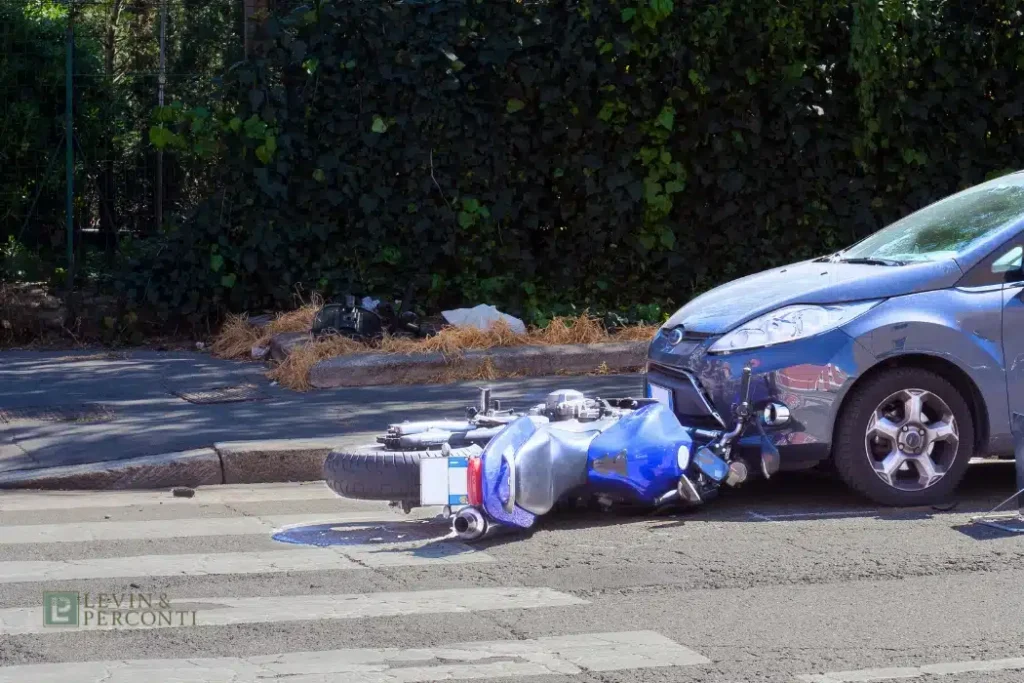
A motorcycle crash can leave you facing painful injuries, medical bills, time away from work, and difficult questions about insurance and fault. You may also be dealing with an insurer that is already investigating the collision or trying to obtain a recorded statement.
A Chicago motorcycle accident lawyer can investigate what happened, identify the people or businesses that may be responsible, preserve important evidence, and help you pursue compensation for your injuries and financial losses.
Home | Chicago Motorcycle Accident Lawyer
Levin & Perconti represents people and families affected by serious injuries throughout Chicago and Illinois. The firm reports more than $2 billion recovered for clients across its practice areas, more than 400 years of combined litigation experience, and a team of more than 30 personal injury attorneys.
Contact Levin & Perconti at (312) 332-2872 for a free, confidential case evaluation.
How Our Chicago Motorcycle Accident Lawyers Can Help
Motorcycle accident claims can involve more than a disagreement between two drivers. Important evidence may disappear, several insurance policies may apply, and more than one party may share responsibility.
Our attorneys can help by:
- Investigating the crash scene and surrounding road conditions
- Obtaining the police crash report, photographs, video, and witness statements
- Preserving electronic information from vehicles, phones, and commercial fleets
- Determining whether a driver, employer, contractor, manufacturer, or public entity may be responsible
- Reviewing liability, uninsured motorist, and underinsured motorist insurance
- Documenting medical expenses, lost income, future care needs, and other damages
- Handling communications and negotiations with insurance companies
- Preparing the case for trial when a fair settlement is not offered
The goal is not simply to prove that a collision occurred. A successful claim generally requires evidence showing who acted negligently, how that negligence caused the crash, and how the crash affected the injured rider.
Who May Be Responsible for a Motorcycle Crash?
The responsible party depends on how and why the collision happened. Potentially liable parties may include:
A Negligent Driver
A driver may be responsible for failing to yield, making an unsafe turn, following too closely, speeding, driving while distracted, or failing to check for a motorcycle before changing lanes. The driver’s conduct must breach a legal duty of care and cause the crash.
A Vehicle Owner or Employer
When the at-fault driver was working at the time of the crash, an employer may also be responsible under certain circumstances. This can arise in collisions involving delivery vehicles, commercial trucks, rideshare vehicles, or company-owned cars.
A Commercial Carrier
Truck and delivery companies may be responsible for unsafe hiring, inadequate training, poor vehicle maintenance, or violations involving driving hours and fleet operations.
A Vehicle or Parts Manufacturer
Truck and delivery companies may be responsible for unsafe hiring, inadequate training, poor vehicle maintenance, or violations involving driving hours and fleet operations.
A Repair or Maintenance Provider
A repair shop may be responsible when negligent work, such as an improperly installed wheel, brake component, or tire, causes a mechanical failure.
A Construction Contractor or Public Entity
Unmarked pavement changes, loose gravel, unsafe construction zones, malfunctioning signals, or poorly maintained roads may contribute to a motorcycle crash. Claims involving the City of Chicago, Cook County, the Illinois Department of Transportation, the Chicago Transit Authority, or another public entity can involve different legal rules and shorter deadlines.
Chicago High-Risk Corridors & Local Hazards
Urban riding in Chicago presents unique environmental and traffic hazards. Our firm investigates crashes across high-traffic Cook County corridors where motorcycle accidents are frequent.
A Construction Contractor or Public Entity
- The Circle Interchange (Jane Byrne Interchange): Where the Eisenhower (I-290), Dan Ryan (I-90/94), and Kennedy Expressways converge, creating frequent blind-spot side-swipes and lane-change collisions.
- Lake Shore Drive (DuSable LSD): High-speed merging traffic, sudden stop-and-go congestion, and weaving patterns create rear-end and side-impact risks, particularly near downtown exits and the Grant Park area.
- Milwaukee Avenue (“The Hipster Highway”): High density of doorings, left-turn cutoffs, and commercial delivery obstructions in Logan Square and Wicker Park neighborhoods.
- Ashland Avenue & 79th Street: Broadside and left-turn collisions at busy commercial intersections with heavy traffic.
- Kennedy Expressway (I-90/94): Construction zones, heavy truck traffic, and sudden congestion.
Local Infrastructure Hazards
- Metal Expansion Joints & Bridge Plates: Wet metal plates on the Chicago River bridges (Michigan Avenue, State Street, LaSalle Street) drastically reduce tire traction, especially during rain or ice conditions. For motorcyclists, loss of traction can trigger front-wheel wobble, high-side flips, or uncontrollable slides.
- CTA Bus Lanes & Potholes: Deep asphalt ruts and potholes on city streets (particularly on major north-south corridors) can trigger sudden loss of control, front-wheel deflection, or violent flips.
- Missing or Faded Lane Markings: Road construction and weather can obscure lane boundaries, creating confusion for motorcyclists navigating heavy traffic.
- Standing Water & Debris: Puddles hiding road surface damage, debris in travel lanes, and loose gravel from street maintenance pose hazards.
Illinois Motorcycle Laws That May Affect Your Claim
Several Illinois laws may affect the investigation, available insurance, and amount of compensation.
Helmet and Eye-Protection Rules
Illinois does not currently require all motorcycle operators and passengers to wear helmets, although state safety authorities strongly recommend properly fitted, U.S. Department of Transportation-compliant helmets.
Illinois law does require motorcycle operators and passengers to use qualifying eye protection. This may include shatter-resistant glasses, goggles, an appropriate face shield, or a motorcycle windshield that meets the statutory definition. Contact lenses alone do not qualify as eye protection.
Important: Not wearing a helmet does not automatically determine who caused a crash. However, an insurance company may argue that helmet use is relevant to the nature or extent of a claimed head injury. The legal significance depends on the facts and should be reviewed by an Illinois attorney.
Passing and Lane Splitting
Illinois law does not expressly authorize a rider to travel between occupied traffic lanes. Section 11-703 also provides that a person operating a two-wheeled vehicle may not pass on the right of another vehicle proceeding in the same direction unless an unobstructed traffic lane is available for the maneuver.
Legal analysis matters: Because the analysis can depend on the rider’s position, available lanes, traffic markings, and the specific passing movement, the facts should be reviewed carefully rather than reduced to a simple label.
Minimum Automobile Liability Insurance
Illinois law generally requires minimum liability limits of:
- $25,000 for bodily injury or death to one person
- $50,000 for bodily injury or death to two or more people in one crash
- $20,000 for damage to another person’s property
These minimum limits may be inadequate when a rider suffers a brain injury, spinal injury, amputation, multiple fractures, or another catastrophic injury. An investigation should therefore examine all potentially applicable liability, commercial, umbrella, uninsured motorist, and underinsured motorist policies.
Uninsured and Underinsured Motorist (UM/UIM) Coverage
Your own insurance policy may include Uninsured Motorist (UM) coverage, which applies when the at-fault driver has no insurance, and Underinsured Motorist (UIM) coverage, which applies when the at-fault driver’s insurance is insufficient.
Example: If the at-fault driver carries only $25,000 in liability coverage but your damages total $200,000, your UIM coverage fills the $175,000 gap (up to your policy limits). This is especially important in motorcycle accident cases because injuries often exceed minimum liability limits.
Modified Comparative Negligence
Illinois follows a modified comparative-negligence rule. An injured person is barred from recovery when that person’s share of fault is more than 50%. When the injured person is 50% or less at fault, the available damages are reduced in proportion to that person’s percentage of fault.
Example: If a jury awards $500,000 in damages but finds you 10% responsible due to lane positioning or speed, your net recovery is $450,000 (reduced by 10%).
Important: An insurer may argue that a rider was speeding, following too closely, positioned unsafely, or difficult to see. Those allegations do not establish fault by themselves. They must be evaluated against video, physical evidence, witness testimony, vehicle data, and the conduct of every involved party.
Emergency Medical Care in Chicago
Immediate medical documentation is critical both for your physical recovery and for establishing the legal connection between the crash and your injuries.
Following a serious motorcycle crash in Chicago, victims are routinely transported via Chicago Fire Department (CFD) EMS to regional Level I Trauma Centers, including:
- Northwestern Memorial Hospital (Streeterville / Downtown) — Leading trauma center for head and spinal injuries
- Rush University Medical Center (Near West Side) — Comprehensive trauma and orthopedic care
- John H. Stroger, Jr. Hospital of Cook County (Medical District) — Major trauma center with extensive surgical services
- University of Chicago Medicine (Hyde Park) — Specialized trauma and neurosurgical care
Why Immediate Evaluation Matters Legally
Medical records create a contemporaneous record linking your symptoms to the crash. They also establish causation, which insurers will challenge with “pre-existing condition” arguments. Delayed treatment can undermine causation claims.
What Compensation May Be Available?
The value of a motorcycle accident claim depends on the evidence, the severity and permanence of the injuries, available insurance, disputed fault, and the effect of the crash on the injured person’s life.
Recoverable damages may include:
Medical Expenses
This may include ambulance transportation, emergency treatment, hospitalization, surgery, medication, rehabilitation, physical therapy, assistive equipment, and reasonably necessary future care.
Lost Income and Reduced Earning Capacity
An injured rider may seek compensation for missed work, lost employment benefits, reduced hours, lost business income, or a long-term inability to return to the same occupation.
Pain, Disability, and Emotional Harm
Non-economic damages may address physical pain, disability, disfigurement, emotional distress, and loss of a normal life.
Property Damage
A claim may include the cost of repairing or replacing the motorcycle, helmet, riding gear, electronics, and other damaged personal property.
Wrongful Death Losses
When a rider dies from crash-related injuries, eligible family members or the estate may be able to pursue a wrongful death or survival claim. Recoverable losses depend on the applicable Illinois statutes and the family’s circumstances.
Be Careful When Speaking With Insurance Companies
Report the crash as required by your policy, but avoid guessing, minimizing your injuries, or speculating about fault.
You may have contractual duties to cooperate with your own insurer. That does not mean you must immediately provide every requested statement or sign a broad medical authorization without understanding its scope. Be especially cautious about recorded statements requested by another party’s insurance company. Those statements can be used against you.
Speak With a Lawyer Before Evidence Disappears
Video may be overwritten, vehicles may be repaired, witnesses may become difficult to locate, and commercial records may be retained for only a limited period.
Contact us immediately so we can preserve evidence and prevent your claim from being undermined by lost or destroyed evidence.
Contact a Chicago Motorcycle Accident Attorney
If you or a family member was seriously injured in a motorcycle collision, Levin & Perconti can review the circumstances, explain your legal options, and determine what evidence should be preserved.
The consultation is free and confidential.
Levin & Perconti
325 North LaSalle Street, Suite 300
Chicago, Illinois 60654
Frequently Asked Questions (FAQs) About Chicago Motorcycle Accidents
No two motorcycle accidents are the same. But in our years of experience litigating cases, we’ve found the same questions often arise. The following are answers to some of the most frequently asked questions about motorcycle accidents in Chicago.
How long do I have to file a motorcycle accident lawsuit in Illinois?
Illinois personal injury actions are generally subject to a two-year limitations period from the date of the crash. However, exceptions can apply, so a deadline should never be calculated from a general website statement alone.
Important: Some actions against an Illinois local public entity or public employee must be filed within one year of the injury or accrual of the cause of action. This may be relevant when a crash involves a municipal vehicle, transit vehicle, local government employee, or roadway condition controlled by a local public body.
Can I recover compensation if I was partly at fault?
Possibly. Illinois law generally permits recovery when the injured person is no more than 50% responsible, although the damages are reduced according to the assigned percentage of fault. Recovery is barred when the injured person is found more than 50% responsible.
What if the driver who hit me was uninsured?
Your own uninsured motorist (UM) coverage may apply. Underinsured motorist (UIM) coverage may also be relevant when the responsible driver has insurance but not enough to cover the losses.
The policy language, coverage limits, exclusions, household policies, motorcycle policies, and other available insurance should all be reviewed.
What if I was not wearing a helmet?
Helmet use and crash responsibility are separate questions. The absence of a helmet does not automatically prove that a rider caused the collision.
An insurer may nevertheless argue that helmet use affected a particular head or facial injury. Medical evidence, biomechanics, causation, and Illinois law may all become relevant.
What if I was lane splitting?
Lane splitting is the practice of riding a motorcycle between two lanes of traffic moving in the same direction. It is prohibited in Illinois by the state’s right-of-way laws. If you were lane splitting when your accident happened, that may impact the compensation you recover.
How much does it cost to hire Levin & Perconti?
The firm offers free consultations and states that eligible injury cases are handled on a contingency-fee basis, meaning attorney fees are generally collected only if compensation is recovered. The written representation agreement controls the exact fee arrangement and responsibility for case expenses.
Legally Reviewed by
Read Bio
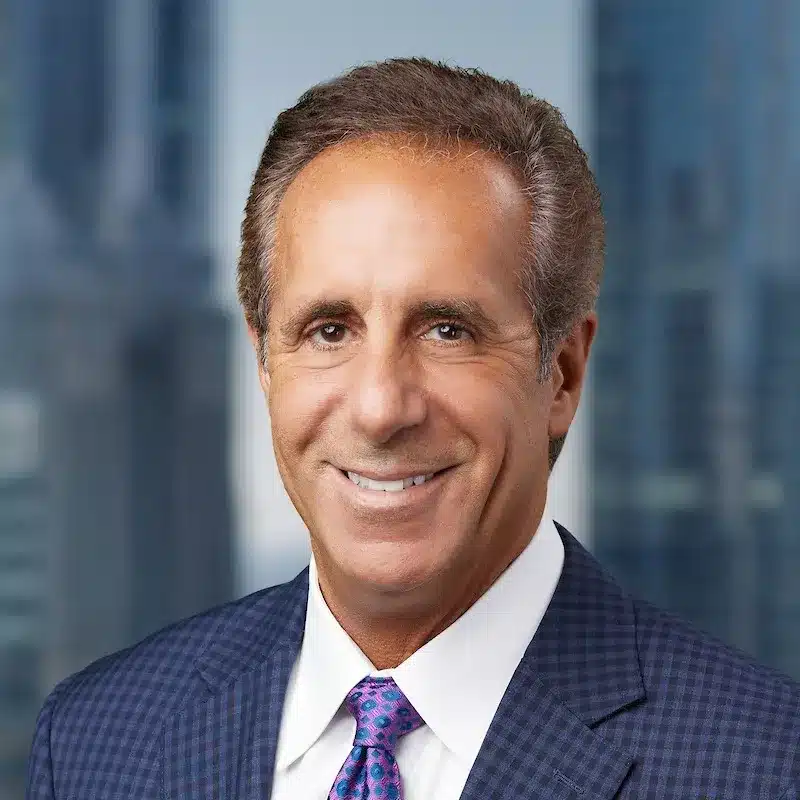
John J. Perconti is one of the nation’s leading medical malpractice attorneys with over 40 years of experience litigating medical malpractice and personal injury cases in state and federal courts. He studied pre-med before law school, which gave him an in-depth understanding of complex medical issues that have played an important role in his success. Having lost his father at age nine, he understands how injuries and deaths affect families. He has won numerous multimillion-dollar record verdicts. His honors and awards include a Lead Counsel Rating in Elder Law, Best Lawyers in America, and Illinois Super Lawyers.
Notable Results
Latest Blogs